A plumbing leak behind a wall can continue unnoticed until it causes visible damage. Because the pipes are hidden, homeowners often notice indirect warning signs first, such as water stains, bubbling paint, damp drywall, or a persistent musty smell.
Not every wall stain or damp area means there is a plumbing leak. Condensation, roof leaks, window leaks, and other moisture problems can produce similar symptoms. However, when several warning signs appear together or moisture repeatedly returns in the same area, there may be a plumbing issue that needs further investigation.
Knowing what to look for can help you recognize a possible hidden plumbing leak behind a wall before the moisture causes additional damage.
10 Signs of a Hidden Plumbing Leak Behind a Wall
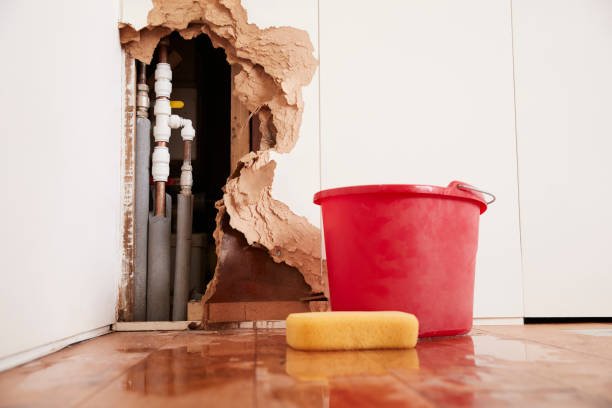
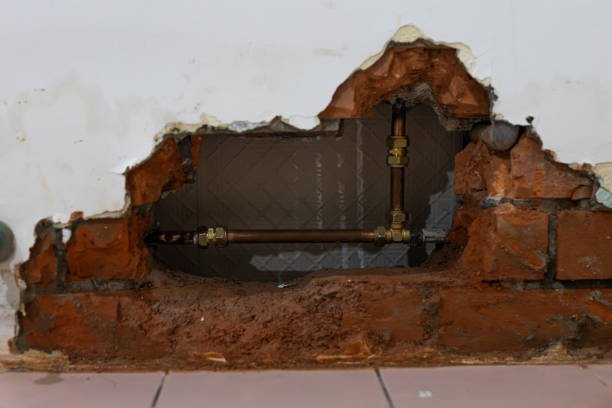
Damaged wall, exposed burst water pipes, sponge and bucket
1. Water Stains or Discoloration
Yellow, brown, or darker patches on a wall can be an early sign of moisture intrusion. A stain may gradually become larger, darken over time, or repeatedly return after being cleaned or painted.
Pay particular attention to stains near:
- Bathrooms
- Kitchens
- Laundry rooms
- Plumbing fixtures
- Walls adjacent to water supply lines
Discoloration alone does not confirm a plumbing leak. Exterior water intrusion and condensation can cause similar marks, so it is important to consider the location and timing of the moisture.
2. Peeling, Bubbling, or Blistering Paint
Moisture behind a wall can cause paint to lose adhesion. You may notice bubbling, peeling, blistering, or uneven areas on the surface.
Wallpaper may also begin separating from the wall when moisture accumulates behind it.
If the same area repeatedly develops paint damage after being repaired or repainted, the underlying moisture source should be investigated rather than simply covering the visible damage.
3. Damp, Soft, or Spongy Drywall
A wall that feels unusually damp, cool, soft, or spongy may have moisture trapped behind its surface.
Drywall absorbs water and can weaken when exposed to ongoing moisture. Over time, the affected area may become softer or begin changing shape.
Signs to watch for include:
- Damp areas that do not dry
- Soft drywall
- A cool patch on the wall
- Bulging or swollen areas
- Changes in wall texture
Avoid pressing aggressively on severely weakened or bulging drywall. If the wall appears saturated or unstable, professional assessment may be necessary.
4. A Persistent Musty Smell
A persistent musty odor can indicate that moisture is accumulating inside a wall cavity, particularly when there is no obvious source of dampness.
Hidden moisture can remain trapped behind drywall, insulation, or other building materials. If an unusual smell repeatedly returns after cleaning or ventilation, it may be worth investigating whether moisture is present behind the wall.
A musty smell alone does not prove that a plumbing pipe is leaking. However, when combined with stains, damp drywall, or recurring moisture, it can be an important warning sign.
5. Mold or Mildew Near the Wall
Visible mold or mildew around a wall, baseboard, or nearby flooring can indicate an ongoing moisture problem. According to the U.S. Environmental Protection Agency, controlling moisture is important for preventing mold growth. When moisture repeatedly affects the same area, identifying and correcting the source is more important than simply cleaning visible growth.
Look for mold or mildew around:
- Baseboards
- Corners of walls
- Areas near plumbing fixtures
- Bathroom walls
- Flooring adjacent to the wall
Mold does not automatically mean a pipe is leaking, but repeated growth in the same location can indicate persistent moisture that should be investigated.
6. Warped Baseboards, Flooring, or Wall Materials
Water does not always remain directly beneath the location where a pipe is leaking. Moisture can travel through wall cavities, framing, insulation, and nearby building materials before becoming visible.
Possible signs include:
- Warped or swollen baseboards
- Buckled flooring
- Discolored trim
- Swollen drywall
- Separating wall materials
Because water can travel, the visible damage may not show the exact location of the plumbing problem.
7. Dripping, Hissing, or Running Water Sounds
Hearing dripping, hissing, or running water when fixtures are not being used can be another possible sign of a hidden plumbing issue.
This may be particularly concerning when the sound appears to come from inside a wall or ceiling.
However, plumbing systems can occasionally make noises for reasons unrelated to leaks. A persistent sound combined with other symptoms, such as dampness or wall damage, provides a stronger reason to investigate.
8. An Unexplained Increase in Water Usage
An unexpected increase in water consumption can sometimes indicate that water is being used somewhere you cannot see.
A hidden plumbing leak is one possible explanation, although increased household activity, outdoor watering, running toilets, and other plumbing issues can also affect your bill.
If your household water habits have remained relatively consistent but your water usage has increased, it may be worth investigating possible causes.
9. Changes in Water Pressure
A hidden issue with a pressurized water supply line can sometimes occur alongside changes in water pressure.
For example, you may notice that multiple fixtures experience an unexpected reduction in water flow.
However, water pressure problems can have several causes, including plumbing restrictions, faulty fixtures, pressure-regulator issues, and problems with the water supply. A change in pressure alone does not confirm that there is a leak behind a wall.
When pressure changes occur alongside other warning signs, such as damp drywall or unexplained water sounds, further investigation may be warranted.
10. Moisture That Repeatedly Appears in the Same Area
One of the more useful warning signs is moisture that repeatedly returns to the same location.
For example, a section of wall may become damp after someone uses a nearby:
- Shower
- Sink
- Toilet
- Washing machine
- Dishwasher
A recurring pattern can provide useful clues about where the moisture may be coming from.
The timing of the problem can also matter. Moisture that appears after using a particular fixture may point toward a nearby plumbing connection or drain-related issue, while moisture that appears continuously may have a different source.
Understanding When the Moisture Appears
The timing and pattern of moisture can sometimes provide useful information about a possible hidden plumbing problem.
For example, moisture that appears continuously may be associated with an issue involving a pressurized water supply line. Water from a supply line can continue escaping even when a nearby fixture is not actively being used.
By comparison, moisture that appears only after using a shower, sink, washing machine, or toilet may be associated with a drain line, fixture connection, or another plumbing component that is only exposed to water during use.
Other patterns may point away from plumbing entirely. For example:
- Moisture that appears mainly after rainfall may be related to a roof, window, or exterior wall.
- Condensation may occur during periods of high humidity.
- Moisture near HVAC equipment may have a mechanical source.
These patterns cannot confirm the exact cause of the problem, but observing when moisture appears can help determine whether further inspection is necessary.
If you suspect that water may be leaking elsewhere in your home, our guide on water damage and leaks explains broader ways to identify possible plumbing leaks.
Wall Moisture Patterns and Possible Causes
| What You Notice | Possible Explanation |
| Stain repeatedly appears after using a shower | Possible plumbing or drain-related moisture |
| Moisture appears continuously | Possible supply-line leak |
| Wall becomes damp after rainfall | Roof, window, or exterior water intrusion |
| Persistent musty smell | Hidden moisture accumulation |
| Paint repeatedly bubbles in one area | Ongoing moisture behind the wall surface |
| Running-water sound when fixtures are off | Possible pressurized plumbing issue |
| Moisture appears near a bathroom fixture | Fixture connection or nearby plumbing issue |
These patterns can help identify possible causes, but they do not confirm the exact source of moisture. Professional inspection may be necessary when the cause remains unclear.
FAQs
How do I know if I have a hidden plumbing leak behind a wall?
Common signs include recurring water stains, damp or soft drywall, peeling paint, musty odors, mold or mildew, warped materials, unusual water sounds, increased water usage, and moisture that repeatedly appears near plumbing fixtures.
No single sign proves that a pipe behind the wall is leaking. Several symptoms occurring together provide a stronger reason to investigate.
Can you hear a water leak inside a wall?
Sometimes. A leak involving a pressurized water line may produce dripping, hissing, or running-water sounds. However, plumbing systems can also make noises for other reasons, so sound alone does not confirm a hidden leak.
Does a hidden plumbing leak always cause a water stain?
No. A leak can remain hidden inside a wall or ceiling before visible staining develops. Other signs, such as musty odors, soft drywall, recurring moisture, or unusual sounds, may appear first.
Can a hidden plumbing leak cause mold?
Persistent moisture can create conditions that support mold growth. If mold repeatedly appears in the same location, identifying and correcting the underlying moisture source is important.
Can a high water bill indicate a hidden plumbing leak?
Yes. An unexplained increase in water usage can sometimes indicate a hidden leak. However, other issues, including running toilets, dripping faucets, irrigation problems, and changes in household water use, can also increase consumption.
Should I cut open the wall to find a plumbing leak?
Not immediately. Opening a wall without knowing where the source of moisture is located can cause unnecessary damage and may expose electrical wiring or other utilities. Observing the warning signs and moisture patterns can help determine whether professional inspection is needed.
The Bottom Line
The most common signs of a hidden plumbing leak behind a wall include recurring water stains, damp or soft drywall, peeling paint, musty odors, mold, warped materials, unusual water sounds, increased water usage, and moisture that repeatedly appears in the same area.
These signs do not always prove that plumbing is the source. Condensation, roof leaks, window leaks, and other moisture problems can create similar symptoms.
However, when several warning signs appear together or moisture follows a consistent pattern, it may indicate a problem that requires further investigation. Paying attention to when and where moisture appears can help distinguish a possible plumbing issue from other sources of water intrusion.