A leaking water heater does not always mean you need to replace the entire unit. In many cases, a plumber can repair a leak caused by a loose connection, faulty valve, or damaged fitting. However, if the storage tank itself is cracked or corroded, repair is generally not a reliable option.
The key is to determine where the water is coming from. The source of the leak can tell you whether the problem may be repairable or whether the water heater needs further evaluation.
How to Tell Where Your Water Heater Is Leaking
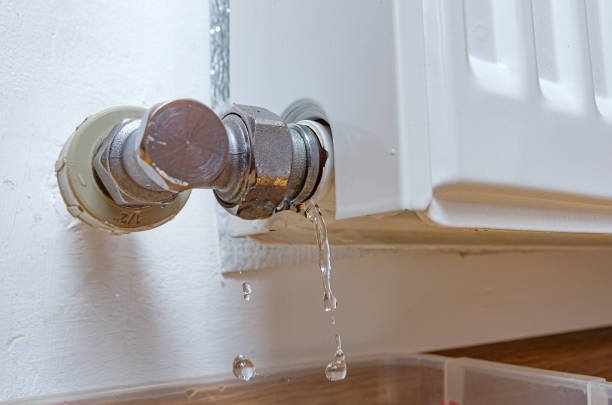
Leaking radiator pipes, water leak through the heating radiator tube nut.
Water can escape from several parts of a water heater, and each location can point to a different problem. Before attempting any repair, identify the source of the water without touching electrical components, gas controls, or pressure-related parts.
Common leak locations include:
Water Supply Connections
The cold-water inlet and hot-water outlet are typically located near the top of a tank-style water heater. A loose, worn, or damaged connection can allow water to drip around the top of the unit and run down its sides.
If the connection is the source of the leak and the tank remains intact, a plumber may be able to tighten or replace the affected fitting.
Drain Valve
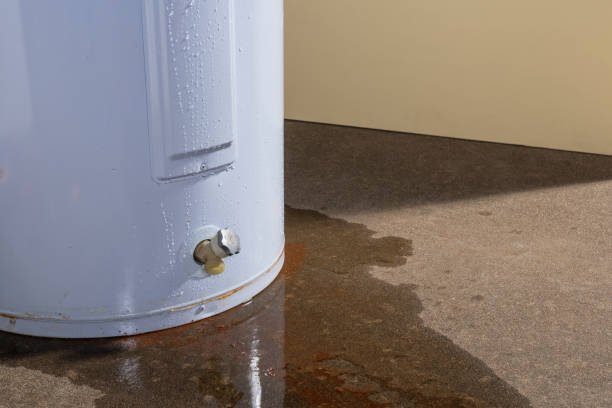
The drain valve is located near the bottom of many tank-style water heaters. It allows the tank to be emptied during maintenance or servicing.
A damaged or leaking drain valve can often be replaced without replacing the entire water heater. However, water underneath the unit does not automatically mean the drain valve is responsible. The actual source should be identified first.
Temperature and Pressure Relief Valve
The temperature and pressure relief valve, commonly called the T&P valve, is a safety component that helps protect the tank from excessive temperature or pressure.
If water is coming from the valve or its discharge pipe, the valve may be faulty. However, excessive pressure or temperature can also cause it to release water.
Because this is a safety-related component, homeowners should avoid disabling or improperly adjusting it. A qualified plumber can determine whether the valve needs replacement or whether another problem is causing it to discharge water.
Water Connections and Fittings
Other fittings around the water heater can develop leaks as they age. Connections may loosen, seals may deteriorate, or components may become damaged.
When the tank itself remains structurally sound, these types of leaks are often repairable.
The Tank Itself
A leak coming directly through the tank is a more serious problem.
Tank corrosion can gradually weaken the metal and eventually create an opening through which water escapes. Once the storage tank itself has developed a significant leak, replacing the water heater is generally more practical than attempting to repair the tank.
Which Water Heater Leaks Can Be Repaired?
A leaking water heater is more likely to be repairable when the problem involves an external component rather than the tank.
Common examples include:
- A leaking drain valve
- A faulty temperature and pressure relief valve
- A loose water connection
- A damaged fitting
- A leaking external component that can be replaced
In these situations, the plumber may be able to replace the failed part while keeping the existing water heater.
The condition of the unit also matters. A repair makes more sense when the tank remains intact and the problem is isolated to a replaceable component.
When Can a Water Heater Leak Not Be Repaired?
The most important distinction is whether the tank itself is leaking.
A storage tank can deteriorate from corrosion over time. Once corrosion creates a crack or opening in the tank, replacing a valve or tightening a connection will not solve the underlying problem.
A tank leak generally means the water heater needs to be replaced rather than repaired.
This is different from a component leak. If water is coming from a valve, fitting, or connection, the failed part may be replaceable. If water is escaping through the tank body, the problem is much more serious.
Can a Water Heater Leak From the Bottom Be Repaired?
Sometimes.
Water around the bottom of a water heater does not necessarily mean the tank has failed. A leaking drain valve or another connection near the bottom could be responsible, and those components may be repairable.
However, if water is coming directly from the bottom of the tank, corrosion or tank failure may be the cause. In that situation, repairing the tank is generally not considered a reliable solution.
Because water can travel along the outside of a tank before reaching the floor, it is difficult to determine the source based only on where the puddle appears. A plumber can inspect the unit and identify the actual leak location.
Is a Leaking Water Heater Dangerous?
A leaking water heater should not be ignored, even if the leak appears small.
Water can damage flooring, walls, cabinets, and other nearby materials. A leak can also become larger over time.
There are additional safety concerns depending on the type of water heater. Water around an electric water heater can create an electrical hazard, while gas-powered units have their own safety considerations.
If you notice a substantial leak, smell gas, see water near electrical components, or are unsure how to safely shut down the unit, avoid attempting the repair yourself and contact a qualified professional.
Can You Keep Using a Leaking Water Heater?
It is not a good idea to assume that a water heater is safe to keep operating simply because it is still producing hot water.
A small leak can worsen without warning. If the tank is already corroded or damaged, continued operation will not repair the underlying problem.
If you discover a leak, identify its source and arrange for an inspection as soon as practical. The appropriate next step may be a simple component repair or, if the tank has failed, replacement of the unit.
What to Do When Your Water Heater Starts Leaking
Your immediate response should focus on limiting water damage and avoiding safety hazards.
1. Identify the Source
Look for the highest point where moisture appears around the unit. Water can travel along pipes and the outside of the tank, so the location of the puddle may not be the actual source.
2. Turn Off the Water Supply if Safe
Many tank-style water heaters have a shutoff valve on the cold-water supply line. Closing the valve can stop additional water from entering the tank.
If you cannot safely access the valve or are unsure which valve controls the water heater, contact a professional.
3. Follow the Appropriate Shutdown Procedure
Electric and gas water heaters have different shutdown procedures. Follow the manufacturer’s instructions for your specific unit.
Do not attempt to manipulate gas controls, electrical wiring, or pressure-related components if you are not qualified to do so.
4. Protect the Surrounding Area
Move items away from the leaking water if it is safe to do so. Clean up accessible standing water to reduce the risk of damage to nearby flooring and materials.
5. Have the Leak Evaluated
If the source is unclear, the leak is significant, or the tank itself appears damaged, have a qualified plumber inspect the water heater.
Repair or Replacement: Which One Do You Need?
The answer depends primarily on the source of the leak. If you’re unsure whether it’s time to replace your water heater, our guide explains the key signs that can help you make that decision.
| Leak source | Is repair usually possible? |
| Loose water connection | Yes |
| Damaged fitting | Often |
| Leaking drain valve | Usually |
| Faulty T&P valve | Often |
| Leak from an external component | Often |
| Cracked storage tank | Generally no |
| Severe corrosion through the tank | Generally no |
This distinction is more useful than simply looking at the size of the puddle. Even a small leak can indicate tank failure, while a noticeable leak from a replaceable valve may be repairable.
When Should You Call a Plumber?
Consider contacting a qualified plumber when you cannot identify the source of the leak, water continues to accumulate, or the problem involves the tank, gas system, electrical components, or pressure-related safety equipment.
A professional can determine whether the leak comes from a replaceable component or from the tank itself. That assessment can help avoid replacing a water heater unnecessarily while also preventing an ineffective repair when the tank has failed.
If the tank is leaking because of corrosion or structural damage, a plumber can also help determine the appropriate replacement options.
Frequently Asked Questions
Can a leaking water heater be repaired?
Yes, some water heater leaks can be repaired. Leaks from valves, fittings, and water connections are often repairable. If the storage tank itself has cracked or corroded and is leaking, replacement is generally necessary.
Is a leaking water heater always a sign it needs to be replaced?
No. A leaking valve, fitting, or connection does not necessarily mean the entire water heater needs replacement. Replacement becomes much more likely when the tank itself is leaking.
Can a water heater leaking from the bottom be fixed?
It depends on the source. A leaking drain valve or connection near the bottom may be repairable. If water is escaping through the tank itself, the water heater will generally need to be replaced.
Can I repair a leaking water heater myself?
Some basic plumbing repairs may appear straightforward, but water heaters involve hot water, pressure, electricity, and, in some cases, gas. Repairs involving safety components or an unclear leak source should be handled by a qualified professional.
The Bottom Line
Can a leaking water heater be repaired? Often, yes, but it depends on where the leak originates.
A leaking valve, fitting, or water connection may be repaired or replaced without replacing the entire unit. A storage tank that has cracked or corroded through is a different situation and generally requires replacement.
The most important step is to identify the actual source of the leak rather than assuming that every puddle means the water heater has failed. If you cannot safely determine the cause, have the unit inspected by a qualified plumber.